
A 3-Day Pilgrimage Through the Living Voice of Revelation
DAY 1 — EPHESUS: THE LOSS AND CALL OF FIRST LOVE
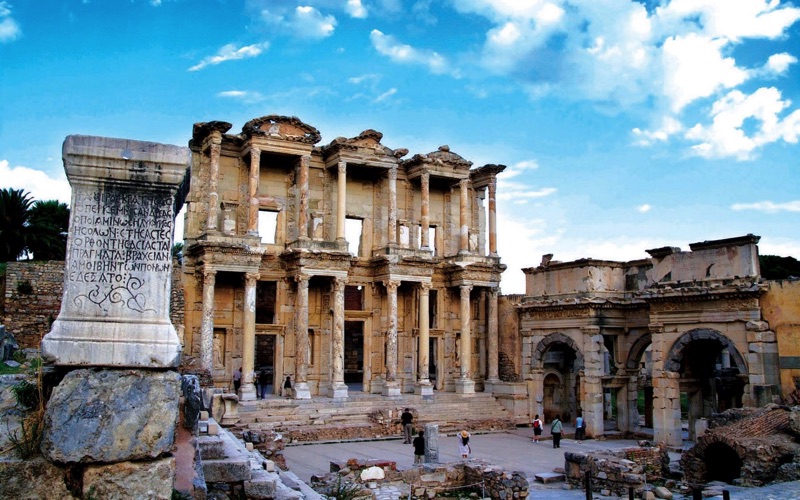
Ephesus
Ephesus is not simply a city—it is the heart of God’s strategy, where Paul the Apostle taught, struggled, and built a living church, and where John the Apostle later guided the believers. The message given here was not just for one church, but a proclamation for all generations.
“You have forsaken the love you had at first.” — Revelation 2:4
Ephesus teaches that faith, doctrine, and endurance mean nothing if love fades, and calls every believer back to the beginning—to Christ Himself.
Basilica of St. John
On this sacred hill rests the tomb of John the Apostle, the one who received the Revelation. His entire life was distilled into one eternal truth:
“Little children, love one another.”
Here we understand that all revelation, all theology, and all prophecy find their fulfillment in love, and without it, even truth becomes empty.
DAY 2 — SMYRNA, PERGAMUM, THYATIRA (OVERNIGHT IN SARDIS)
Smyrna (Agora of Izmir)
Smyrna is the church that suffered yet remained unbroken. In the face of death and imperial pressure, believers chose Christ above all.
“Be faithful unto death, and I will give you the crown of life.” — Revelation 2:10
It reminds us that true wealth is not comfort, but faithfulness, even when everything is taken away.
Pergamum
Pergamum stood at the center of imperial power, where the throne of authority confronted the truth of Christ. Yet believers held firm.
“You remain true to My name…” — Revelation 2:13
Here we see that faith is not tested in peace, but in opposition, when standing for Christ carries a cost.
Thyatira
Thyatira was a city of trade, where compromise slowly entered daily life. The believers were growing—but also tolerating what would weaken them.
“I know your deeds, your love and faith…” — Revelation 2:19
It teaches that growth without truth leads to quiet spiritual decline, and calls believers to discernment.
Overnight in Sardis
DAY 3 — SARDIS, PHILADELPHIA, LAODICEA, COLOSSAE
Sardis
Sardis appeared alive but was spiritually asleep. It is a warning against illusion and reputation without reality.
“You have a reputation of being alive, but you are dead.” — Revelation 3:1
Sardis reminds us that spiritual life cannot be inherited or imitated—it must remain alive within.
Philadelphia
Philadelphia was small, weak, yet faithful. It carried the mission forward not by power, but by obedience.
“I have set before you an open door…” — Revelation 3:8
It shows that God opens doors not for the strong, but for the faithful.
Laodicea
Laodicea was lukewarm, distant, and self-sufficient—yet deeply loved by Christ.
“Those whom I love I rebuke and discipline. So be earnest and repent.” — Revelation 3:19
No matter how far one has gone, no matter how cold the heart has become, Christ still calls, still knocks, still waits. Like the shepherd seeking the lost sheep, He does not abandon—but restores, not rejects—but embraces.
Laodicea reveals that repentance is not rejection, but the doorway back into the love of Christ who never stopped loving us.
Colossae
Colossae reveals the hidden structure of the early Church. Through Epaphras, the ministry of Paul the Apostle extended beyond his presence.
“You learned it from Epaphras…” — Colossians 1:7
It teaches that God’s work is not built on one man, but on faithful servants carrying the truth forward.
FINAL PILGRIMAGE REFLECTION
This journey is not about ruins—it is about hearing the voice that still speaks.
These are not only seven churches of the past, but seven mirrors of the present.
And as you walk these lands, you will not only understand them—
you will recognize yourself within them.
